Barbell Back Squats: How to Do It, Muscles Worked & Benefits
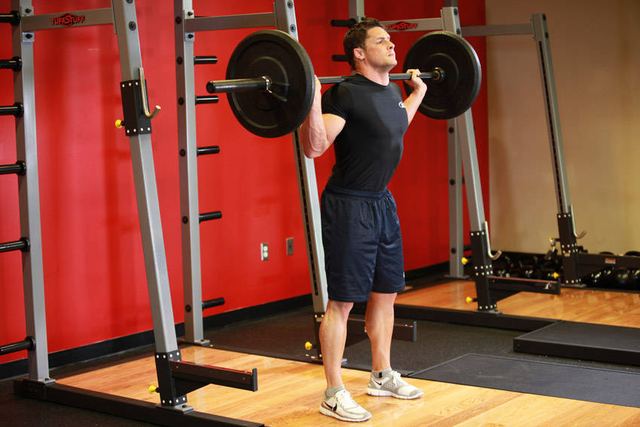
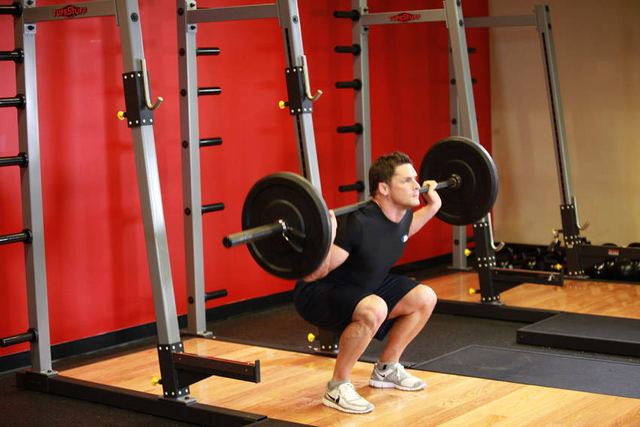 Animated demo
The barbell back squat is often called the king of exercises. With the bar on your upper back, you can load your legs and hips heavier than with almost any other movement. It builds the quads, glutes, adductors and core and is a key lift for both strength and muscle size.
What is the barbell back squats?
The barbell back squat is often called the king of exercises. With the bar on your upper back, you can load your legs and hips heavier than with almost any other movement. It builds the quads, glutes, adductors and core and is a key lift for both strength and muscle size.
The barbell back squats is beginner-friendly and a compound movement. Compound exercises use several joints and muscle groups at once, so they let you move more weight, burn more energy and build functional strength in less time. You can do it in a gym, which makes it easy to fit into almost any routine.
Muscles worked
The main muscles trained by the barbell back squats are the quads, with help from the calves, glutes, hamstrings, lower back.
Quads (primary)
The quadriceps are the four muscles on the front of the thigh. They straighten the knee and are the main movers when you stand up from a squat, climb stairs or jump.
Calves (secondary)
The calves are made of the gastrocnemius (the visible upper part) and the soleus (underneath). They point the foot and are essential for walking, running and jumping.
Glutes (secondary)
The glutes (gluteus maximus, medius and minimus) are the largest and strongest muscles in the body. They extend and rotate the hip, power sprinting and jumping, support the lower back and shape the hips.
Hamstrings (secondary)
The hamstrings run down the back of the thigh. They bend the knee and extend the hip. Strong hamstrings protect the knees and balance out the quads.
Lower back (secondary)
The lower back muscles (mainly the erector spinae) keep the spine straight and upright. They work hard to hold a neutral back in deadlifts, rows and squats.
How to do the barbell back squats: step by step
- This exercise is best performed inside a squat rack for safety purposes. To begin, first set the bar on a rack to just below shoulder level. Once the correct height is chosen and the bar is loaded, step under the bar and place the back of your shoulders (slightly below the neck) across it.
- Hold on to the bar using both arms at each side and lift it off the rack by first pushing with your legs and at the same time straightening your torso.
- Step away from the rack and position your legs using a shoulder width medium stance with the toes slightly pointed out. Keep your head up at all times and also maintain a straight back. This will be your starting position. (Note: For the purposes of this discussion we will use the medium stance described above which targets overall development; however you can choose any of the three stances discussed in the foot stances section).
- Begin to slowly lower the bar by bending the knees and hips as you maintain a straight posture with the head up. Continue down until the angle between the upper leg and the calves becomes slightly less than 90-degrees. Inhale as you perform this portion of the movement. Tip: If you performed the exercise correctly, the front of the knees should make an imaginary straight line with the toes that is perpendicular to the front. If your knees are past that imaginary line (if they are past your toes) then you are placing undue stress on the knee and the exercise has been performed incorrectly.
- Begin to raise the bar as you exhale by pushing the floor with the heel of your foot as you straighten the legs again and go back to the starting position.
- Repeat for the recommended amount of repetitions.
Coach’s note: Practice the first sessions with a light load or an easier variation. Perfect technique first, then add reps, then add weight.
Benefits of the barbell back squats
- Builds maximum leg and glute strength and size
- Allows steady progressive overload for years
- Strengthens the core, back and bones
- Raises total body strength and athletic power
Like all resistance training, the barbell back squats also contributes to the general health benefits of strength work: stronger bones, better blood-sugar control, improved mood and a higher resting metabolism over time. The U.S. Physical Activity Guidelines recommend muscle-strengthening activities for all major muscle groups on two or more days per week for adults.
Common mistakes to avoid
- Bar sitting on the neck instead of the upper back muscles
- Knees caving inward on the way up
- Good-morning squat: hips rise faster than the chest
- Cutting depth as the weight gets heavy
Most of these mistakes happen when the weight is too heavy or when you rush. Film one set from the side with your phone. It is the fastest way to spot form problems without a coach.
Form tips from a trainer
- Set the bar at mid-chest height in a squat rack and always use the safety pins
- Take a big breath into your belly and brace before every rep
- Go down until the hip crease is at or below the top of the knee
- Add 2.5–5 lb (1–2.5 kg) per week while form stays perfect
How to breathe
Breathe in as you lower the weight or your body (the easier phase) and breathe out as you push. For heavy sets, take a big breath into your belly before the rep, brace your core, and breathe out near the end of the push.
Sets and reps by fitness level
| Level | Sets × reps | Rest | Frequency |
|---|---|---|---|
| Beginner | 3 × 8 with light weight | 60–90 sec | 2× per week |
| Intermediate | 4 × 6–8 | 60–120 sec | 2× per week |
| Advanced | 5 × 3–5 heavy | 90–180 sec | 2–3× per week |
Choose a load or variation where the last 1–3 reps of each set feel hard but your form stays clean. When you can do the top of the rep range for every set, make it harder: add weight, add reps, slow the tempo or move to a harder variation. This is called progressive overload, and it is the main driver of strength and muscle gains.
Easier and harder variations
Make it easier
Make it harder
- Pause squats
- Front squats
Barbell Back Squats for men and women
The technique of the barbell back squats is the same for men and women. The difference is in programming. Men often aim for more upper-body size and use heavier loads with lower reps, while many women prefer more lower-body and glute volume and moderate loads with higher reps. Both approaches work. Muscle responds to effort and progressive overload regardless of gender, and women typically recover a little faster between sets.
You will find this exercise in these HelloMyTrainer programs:
- Men's Beginner Gym Workout Plan (3-Day Full Body)
- Men's Intermediate Gym Program (4-Day Upper / Lower Split)
- Advanced Push / Pull / Legs Gym Program for Men (6 Days)
- Women's Intermediate Gym Program (4-Day Glute & Toning Split)
- Advanced Gym Program for Women (5-Day Glute & Strength Split)
Safety tips
- Warm up for 5–10 minutes before your first working set: light cardio plus a few easy reps.
- Stop immediately if you feel sharp, stabbing or joint pain. Muscle burn is normal; pain is not.
- If you have an injury, are pregnant, or have a heart, blood-pressure or joint condition, ask your doctor or a physical therapist before doing this exercise.
- Use safety pins, safety arms or a spotter whenever you lift a barbell close to your limit.
Frequently asked questions
What muscles does the barbell back squats work?
The barbell back squats mainly works the quads, with the calves, glutes, hamstrings, lower back helping.
Is the barbell back squats good for beginners?
Yes. It is a beginner-friendly exercise. Start with the beginner sets and reps above and focus on clean technique.
How many sets and reps of the barbell back squats should I do?
Beginners: 3 × 8 with light weight. Intermediate: 4 × 6–8. Advanced: 5 × 3–5 heavy. Train each muscle group about twice per week.
Can I do the barbell back squats at home?
This version needs gym equipment. At home, try Goblet Squats instead.
How often should I train with the barbell back squats?
Two to three times per week is ideal for most people, with at least 48 hours between hard sessions for the same muscle group.
Related exercises
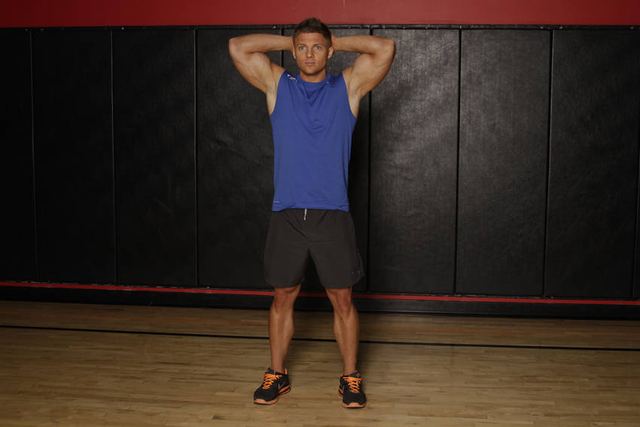
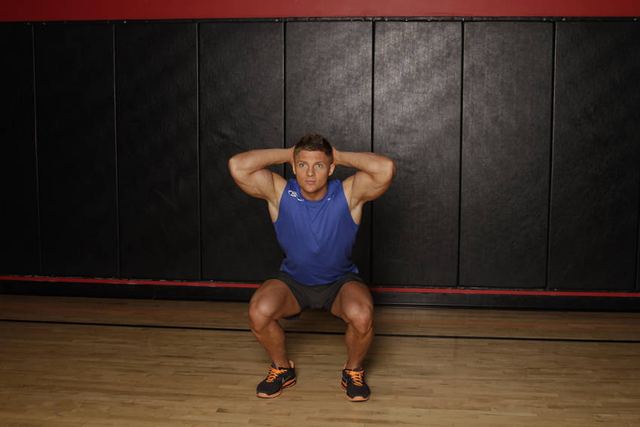 Animated demo
Bodyweight Squats
The bodyweight squat (also called the air squat) is the foundation of lower-body training.
 Animated demo
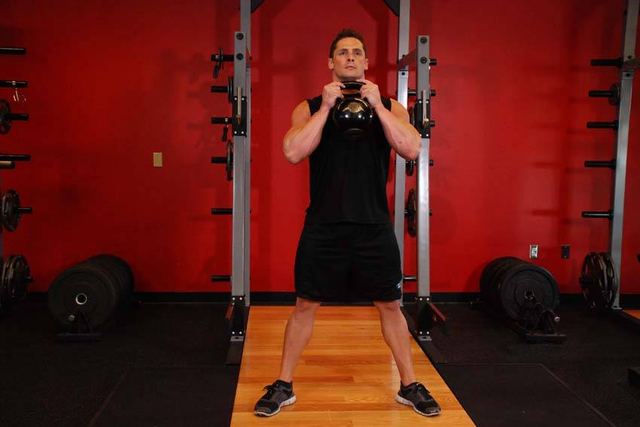
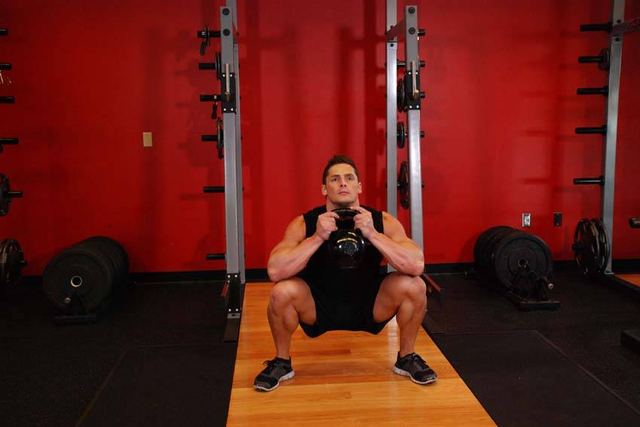
Goblet Squats
In a goblet squat you hold one dumbbell or kettlebell at your chest.
 Animated demo
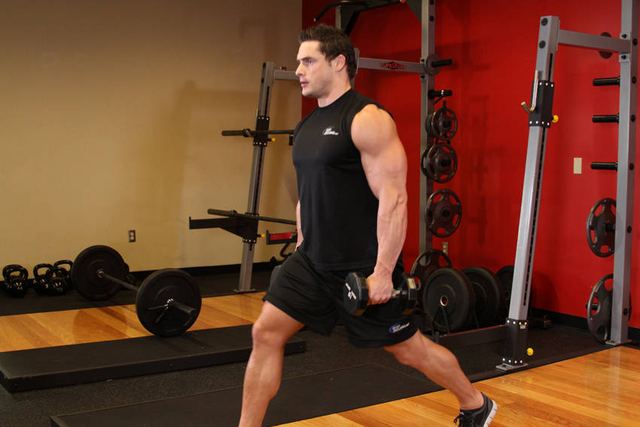
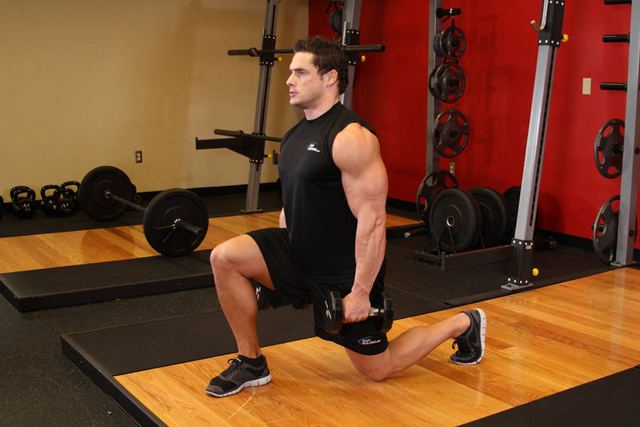
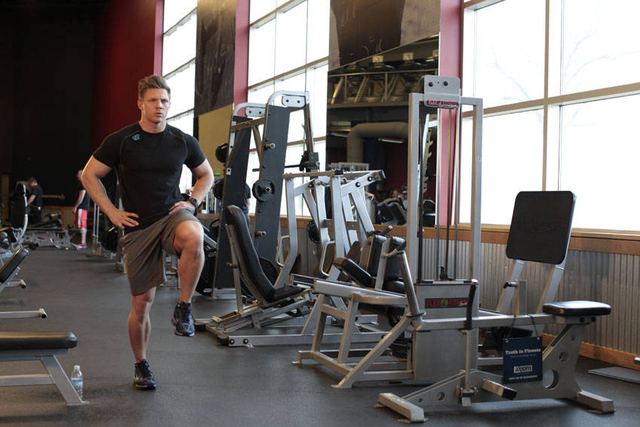
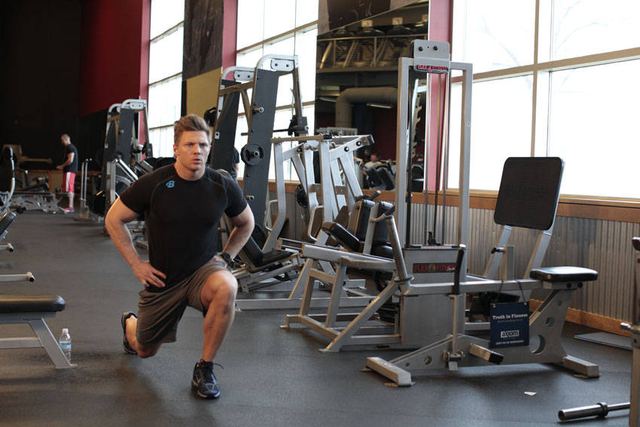
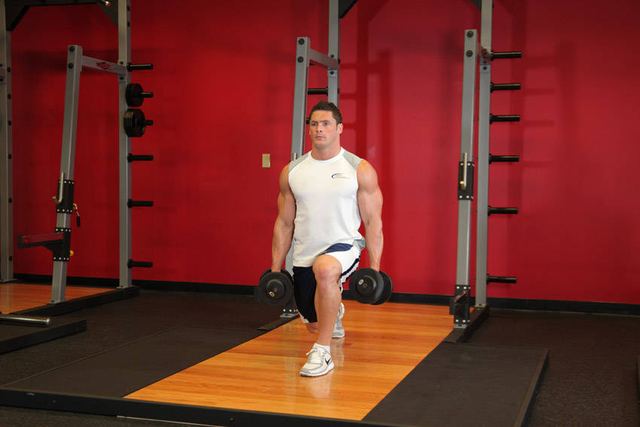
Dumbbell Lunges
Lunges train one leg at a time, which fixes strength differences between sides and challenges your balance.
 Animated demo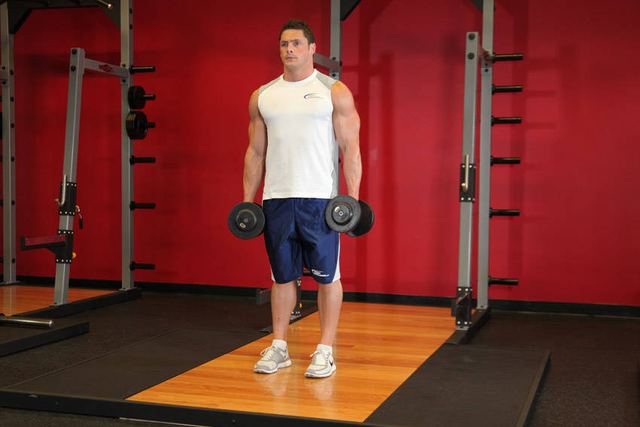
 Animated demo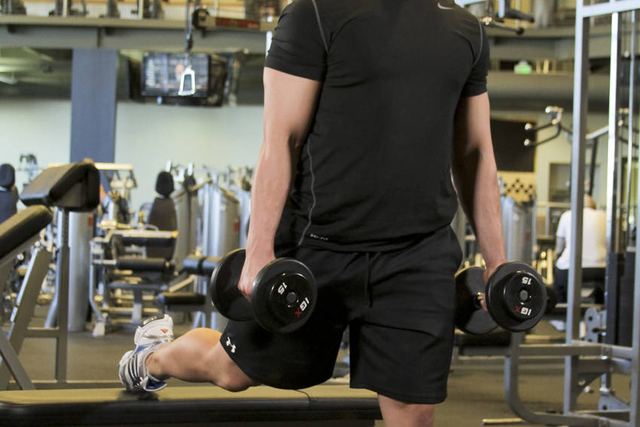
 Animated demo
Bulgarian Split Squats
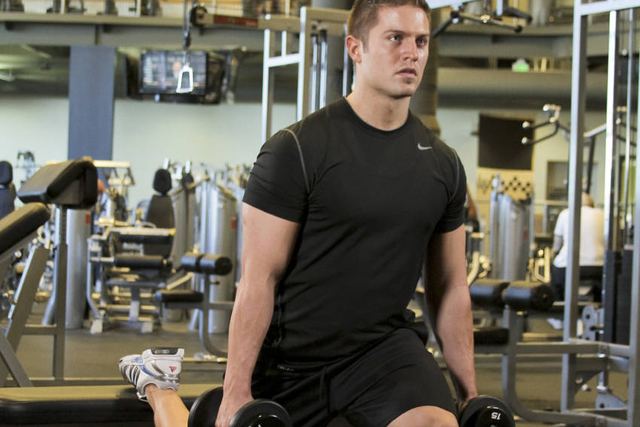
The Bulgarian split squat puts your rear foot on a bench while you squat on the front leg.